
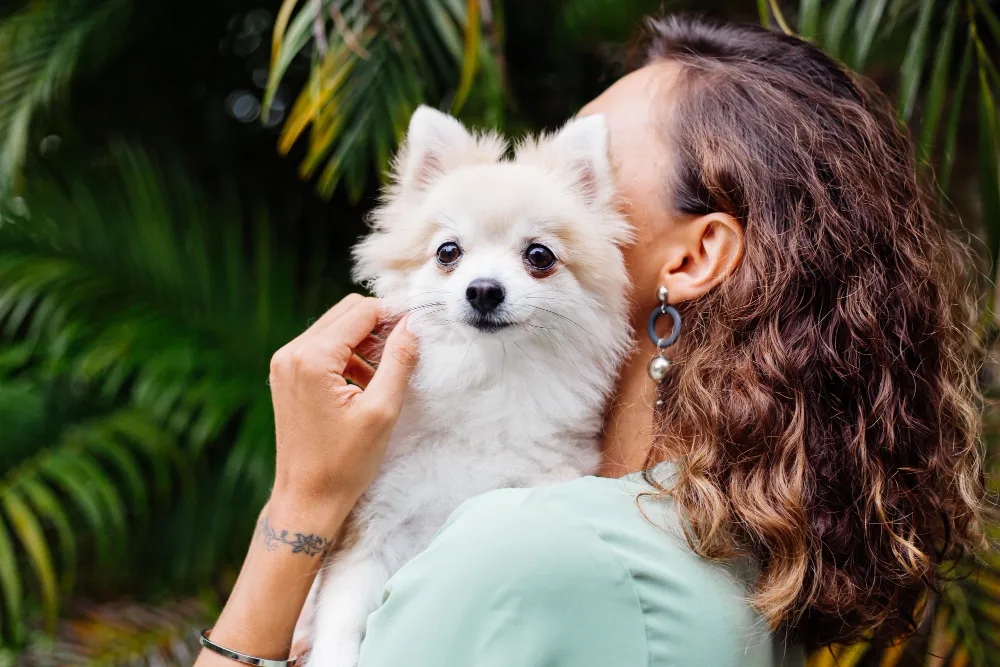
A puppy raised in a human environment rather than in rows of kennels has a unique quality. They learn what it’s like to be held, loved, and talked to as soon as they open their eyes, and that early experience shapes the self-assured, loving dog they’ll grow up to be.
You are already aware of how difficult it can be to find family raised Pomeranian puppies in the USA from reliable breeders. It’s difficult to determine who is telling the truth between backyard breeders, online marketplaces, and puppy mills disguised as “home-raised” businesses. Fortunately, once you know what to look for, a real family breeding program will look and feel entirely different.
What Does “Family-Raised” Actually Mean?
Since the phrase is frequently used, it’s important to clarify what it should actually involve:
- Puppies do not live in outdoor kennels or garages; instead, they live inside homes.
- They are comfortable around the normal house chaos because adults, children, and occasionally other pets handle them daily.
- They genuinely know the puppy; breeders can provide in-depth answers about the puppy’s parents, medical history, and temperament.
- Litters are kept small, so each puppy receives individual attention rather than being treated like a number.
- There is ongoing support after you bring your puppy home, more than just a transaction and a farewell.
There’s more to this type of environment than just a cute Instagram picture. It has a direct impact on how a puppy responds to new situations later in life, such as riding in a car, going to the vet, interacting with strangers, and adjusting to your home routine.
Why Early Socialization Matters So Much?
Pomeranians are a small breed with a big personality, and their upbringing during the first eight to twelve weeks of life has a long-lasting effect. Puppies who are exposed to various people, household noises, and gentle handling typically develop into dogs that are:
- More confident in new situations
- They are easier to train because they are used to human interaction
- Less prone to nervousness or barking due to anxiety
- Ideal for households with kids or other pets
Puppies raised in commercial or isolated environments frequently miss this crucial window, which can later manifest as reactive or fearful behaviors that are completely upbringing-related and have nothing to do with genetics.
Falling for a Pomeranian
To be honest, no one studies these dogs because they need to be convinced that they’re an adorable Pomeranian. It’s difficult to resist the fox-like face, the fluffy double coat, and the small frame that somehow conveys a huge personality. Apart from appearances, Pomeranians are typically:
- Surprisingly effective and vigilant watchdogs for their size
- Having fun without requiring a lot of physical space
- Strongly attached to their families, frequently choosing a favorite
- Because of their intelligence and desire to please, they are trainable.
They do best with owners who have a slight stubborn streak and an awareness of grooming requirements, but for most families, that trait is just what they need.
What to look for in a Reputable Breeder
A little research goes a long way before deciding on any breeder. Red flags usually appear quickly with less transparent sellers, but reputable programs are usually happy to answer questions and show you around.
- Request a video call or in-person visit to the puppies’ upbringing.
- Request the puppy’s and parents’ medical clearances and vaccination records.
- Look for comments, endorsements, or recommendations from previous puppy owners.
- Watch out for people who are pressuring you to pay a deposit or who are unwilling to answer questions.
- A reliable breeder will frequently ask about your expectations, experience, and home.
When you have a two-way conversation with someone who truly cares about their puppies, it’s usually a positive indication.
Preparing Your Home Before Puppy Arrives
After you’ve selected the ideal litter, a little preparation helps everyone transition more smoothly:
- puppy-proof low areas because Pomeranians are curious and small enough to fit into confined spaces.
- For naps, set up a comfortable bed or crate in a peaceful area.
- Keep some safe chew toys and age-appropriate food.
- Within the first week, make an appointment for your first veterinary visit.
- Make budget for grooming supplies in advance because that double coat requires frequent brushing.
These minor changes ease the stress of a puppy’s first few days in a new environment and help them settle in more quickly.
What About the Cost?
It makes sense that one of the first things most families ask is how much does a Pomeranian dog cost. Depending on the breeder’s methods for raising their litters, size, coat color, and lineage, prices can vary significantly. Puppies from ethical, family-run breeding programs are frequently slightly more expensive than those from backyard operations; however, this discrepancy is typically due to the proper veterinary care, high-quality nutrition, and socialization efforts required to raise a well-behaved puppy. The cost should be viewed more as an investment in the dog’s temperament and long-term health than as a numerical value.
Finding a breeder who raises puppies the proper way, with patience, attention, and genuine care; is worthwhile because bringing home a Pomeranian will influence your family for the next ten or more years. Every litter at Burnette’s Exclusive Pomeranians is produced with a puppy that is healthy, well-socialized, and prepared to join the family right away.